|
If you own an eCommerce business, it’s easy to see what a good SEO can do to your revenue and investment. As it was shown in the movie named “The Intern”, where Anne Hathaway got all freaked out as her clothes selling website won’t zoom in. In simple words, you don’t get something right, people don’t visit your website and you don’t sell your products. Hence, a proper SEO will increase traffic which will help you to earn more. But take the non-eCommerce websites like online magazines or blogging platforms for instance. How do they determine if their SEO variables are in the right place or not? They do not have any product to sell; hence their process of return on investment calculation is not that direct. Still, the whole process of ROI calculation should be brought down to currency values ultimately for better analyzing a site and fix the occurring issues. This post deals with ROI calculation of a website, be it eCommerce or a blogging page. It then moves on to traffic prediction and SEO fixes and how these can ultimately increase the overall revenue. All the examples presented here are based on a few assumptions to keep things simple; however, hopefully they will be enough to give you a vivid idea about the relation between SEO and ROI. ROI for web pages –
Return on Investment or ROI is defined as the amount of money you get back against every dollar or an equivalent currency spent. To state it simply, say you pay $5 on manufacturing a product (cost of machinery and workforce included) and sell it at $10, the ROI then stands at ($10-$5)/$5 = $1. Or, for every dollar you spent manufacturing the product, you get back $1 against it. ROI is certainly different from profit as the latter in this case stands at $5 or 100%. A similar concept works for websites too, but a term known as conversion rate comes in. Not every visitor to your site will stick around or buy your product. Hence this figure (expressed in percentage) is used to indicate the amount of sale made, in case of eCommerce platforms, and the number of ads clicked on, in case of non-transactional web pages. For eCommerce platforms – The calculation is pretty straight forward. If your company has spent $5,000 on SEO, you will at least expect 100 products to be sold each costing $50. This means, if you have 10,000 visitors to your site in a month, your conversion rate must be at least 10%. ROI calculation, in this case, will be: (Cost of each product * number of visitors * conversion rate) – amount spent on SEO / amount spent for SEO Which in our example gives, ($50*0.10*10000)-$5000 / $5000 = $0. So, you earn nothing from your SEO page. If your visitors increase from this assumed figure, you have a positive ROI. Anything less, you are left with a negative ROI. For non-transactional websites – These types of sites earn their profit through advertisements. So, the definition of conversion rate also varies accordingly. It is now defined as a number of clicks on every ad on your page that receives among the list of visitors to your site. According to pay-per-click rule, every click will fetch you some money, and this is how we calculate our SEO ROI. Continuing with the same example, say you have spent $5,000 on optimizing your page. Now, say you have 3 ads running on your page which give you $1 for every click (figure exaggerated for simplicity). So, if a visitor clicks on every ad that he/she sees, you retrieve $3 every time someone is on your site. ($3 * 0.10 * 10000) – $5000 / $5000 = -0.94 So, you have a negative ROI. Notice that the product valuation just changed in this case from $50 to $3. The concept remains the same, only the product you sell varies. So, what do you do? Certainly you cannot increase what the advertisers are paying for every click that they get. Also, you cannot provide more boxes for showing more ads as that will look dingy. What you can do is increase the number of traffic you get, and this is where proper SEO comes in. Now, in case of considering 10,000 people are visiting your page, increase the figure to 200,000. The calculation now becomes: ($3 * 0.01 * 200,000) – $5000 / $5000 = $0.2 Hence, you make 20 cents for every dollar you invest in SEO. Now, you can also increase your ROI by cutting down on the SEO cost. Had it been $2000 in place of $5000, your ROI would have measured at $2. And this is where organic traffic prediction comes in, and this is what will tell you whether to go for SEO or not?
Organic traffic prediction – Google Console and Analytics has every data and statistics about what is going on in your web page. You will get the amount of traffic to your website figure directly from here on a daily, monthly and yearly basis. To get a prediction figure, copy the monthly data for over a year and take them to a spreadsheet. Then, carry out a few simple steps.
Thus, with these calculated values, you can estimate whether you will achieve positive ROI or a negative one using the formulas mentioned above. Fix SEO and test it – Now, if negative ROI continues or you simply want to increase your ROI, you definitely have to increase that traffic count figure. And for this, you have to make SEO changes. Some of them could be:
And lastly – When all these are done, it then comes down to your place in the SERP. Statistics show that for a particular keyword, the first link gets 42% of the total hits; the second gets nearly 11%, and the number go on decreasing as we move on. So, your placement will also determine the traffic count and ultimately your ROI. Remember, no prediction is 100% accurate. After all, the calculations that you perform are ultimately based on medians of past data that take the approximate value of the most occurring figure. However, such organic traffic predictions give you a fair idea about the time to come and help your estimate an amount that you should spend on SEO. The mathematics is no rocket science but can do wonders in increasing your online income. Interact with Google console and increase your ROI. Good luck! |
| 6 SEO Tips That You Can Apply Without The Telp Of Any Expert
What does a proper SEO of your website do? It helps you to rank in search engines. What happens when you rank? More people get to see your site and access your services. And what does this do to your business? It increases your revenue and helps you prosper. But to rank among 850 million web pages around is no piece of cake. The task is tedious and requires experts to get every SEO parameter right. Now, you can always hire an expert (which you always should at some point in time). These people are well-versed in what they do and will get to the drawing board to make your site rank. This does two things to your business –
But, not all businesses start with that amount of initial capital where you can hire a developer to create your site and then approach an SEO team to make your page rank. Simply stating, there can be a possibility where you fall short on capital after creating a fantastic website for your cake shop and will have to wait a year to hire an SEO company. So what happens in this 1 year? Do you sit and wait to gather enough capital? 1 year is huge in the online world and is not good for your digital marketing strategy. Take a simple instance – if you own a business named “John’s bakery” and want to go online with the URL “johnsbakery.com”, it may so happen that someone else may take this niche over and capture the market using “johnsfreshbakery.com”.
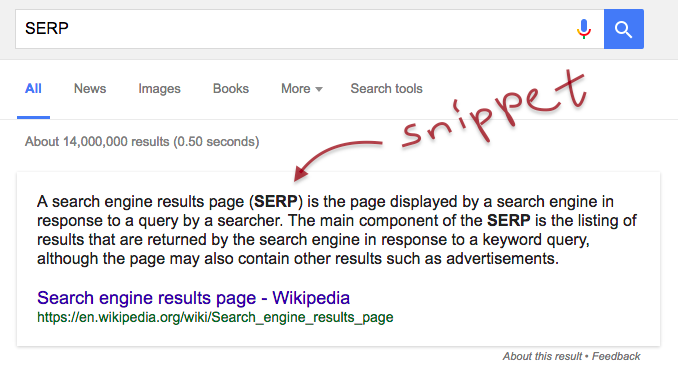
Your brand value losses out in the online world. But here is the thing, even in that 1 year where you are low on cash and short on investment, you can play your own SEO tricks to make your page rank. The best part is – these are not rocket-science, it does not involve money to apply and does a lot to help you climb that SEO ladder. Here are 6 simple but effective tricks that will help search engines value your page and rank them higher in a progressive manner. Take these routes and notice the differences immediately. #1 – Develop snippet friendly content Noticed a small section that pop-up every time you post a query on Google? This is known as snippets. It generally includes an answer to your query along with the link to the website from which it is taken. The fun part lies in Google’s algorithm of generating these snippets.
All Google wants is content that answers the posted query in a short and crisp manner. This will ensure your site to overtake all the high profile ones and feature at the top of page 1. What you need to do is:
Make your site snippet-ready, and in no-time Google’s algorithm will take notice of you.
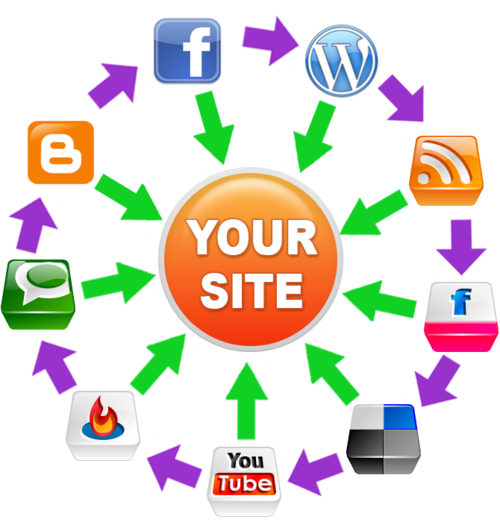
#2 – Focus on social media Why does Nike pay a dedicated team just to maintain an Instagram profile? Social media plays a huge role in bringing you traffic and increase your conversion rate. At times, when you type in a company name in any search engine, you may notice their Facebook or LinkedIn page ranking higher than their actual official company website. This trend shows that more people visit a company’s social media pages to judge its service. Opening an account and posting feeds and images hardly require any cash. All you need is an internet connection and marketing skills. #3 – Keep updating your page Never forget the page itself! A lot of hard work behind Facebook and Twitter but your official page sits idle – Google specifically does not rank such pages. So, you will have to continue to update your pages’ content with fresh ones just to convey this message to the search engine that you are active. Post blogs, encourage visitors to post comments or reviews, maybe get in a video of something – all these will increase your online reach and let you climb in SERP. The very next link to your social media page must be your official site. This somewhat builds trusts among visitors.
#4 – Reduce loading time And once you have successfully attracted a visitor, it should take an eternity to load. Reports from SEO experts show, and Google confirms, that most people tend to get impatient when a page takes more than 5 seconds to load. The magic figure is 2-3 seconds, and you can achieve this by:
Create a website using single coding lines. Complex ones take more time for the browser/server to decode and hence lag your site. People enjoy fast internet and a high-speed page makes them immensely happy. #5 – Create authentic links Backlinks are from other pages that direct traffic to your site. Search engine crawlers respect this fact as it sees your page as a site with valuable and helpful content. If its natural, it’s great but you can always create a few in high profile sites. The best possible ones are sites like Quora. If someone posts a query like, “the best cake shop in Miami”, you can always post your pages’ link there. Again, if you have addressed a cake issue in one of your blogs, you can certainly post that link on any comment section. Apart from these, create internal links to the pages of your site. This will help users to find their way on your website. This will reduce bounce rate and help you rank with any regular hassle.
#6 – Think mobile Google is about to shift its ranking algorithm to mobile-first index. This means that the search engine will scan your mobile web page first and then decide on your rank. Now, a mobile page is quite different from a desktop version and you must keep a few points in mind while creating one.
Create responsive pages while developing your site in the first instant. This way, your page fits the screen no matter which device it opens on and all corners remain intact. But then again, you may also go for creating an entirely separate website for mobiles with a link to the desktop version. Bonus tip – Another thing that is on the rise is voice search. This means people are more prone to search “cake shops near me” than “best cakes shops around”. So, if your keyword integrates first-person tone keywords, you are likely to rank faster who are late to this party at least. You can have a URL that is location specific and definitely place yourself accurately on Google Maps. A proper contact information online helps to build trust and create that much-needed customer base for you.
Parting thoughts – All these do not require a single penny but put you in that growth list. Digital marketing goes a long way to giving your business and revenue that hike. So, do not just sit around because you do not have a fund to hire an expert. Apply your own SEO tricks and make your page rank. |
Improve The Relationship Between SEO And ROI With Organic Traffic Prediction